The public usually experiences a record at the end of the process.
They hear the song.
They watch the video.
They see the artist perform it.
They stream it, share it, or discover it through an algorithm.
What they rarely see are the conversations, relationships, contracts, creative adjustments, and split-second decisions that happen before the public ever encounters the music.
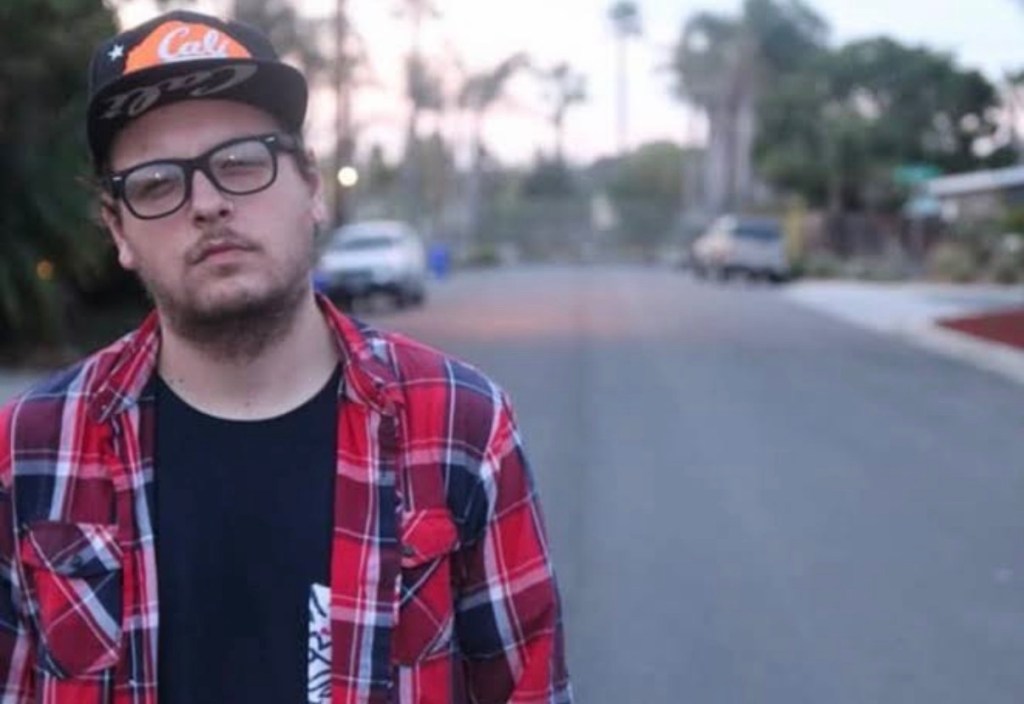
That invisible layer is where Daniel Byelich, professionally known as D. Lynch, has built much of his career.
A producer, mastering engineer, A&R, and catalog broker, Byelich has worked across records involving Snoop Dogg, Dr. Dre, Sting, Chris Brown, Young Thug, and emerging artists.
His A&R philosophy is rooted in one simple idea: recognizing potential is only the beginning.
The real challenge is turning that potential into a moment.
Three Days to Build a Global Moment
Few examples demonstrate that better than Snoop Dogg’s “Another Part of Me” featuring Sting, produced by Dr. Dre and The ICU.
The record already represented an extraordinary combination of musical worlds.
Snoop Dogg and Dr. Dre brought one of hip-hop’s most recognizable creative partnerships into the equation. Sting represented an entirely different musical history. The result created a bridge between generations and genres.
But the opportunity became even larger when Fortnite entered the picture.
Byelich worked directly with Epic Games to bring the song into Fortnite’s “Remix: The Finale” event.
The timeline was anything but ordinary.
Instead of having months to prepare, the opportunity arrived with only days to make the necessary creative and business decisions.
“I literally signed the contract while on the plane. We did this with like 3 days notice.”
That sentence captures an important reality of modern A&R.
Opportunity does not always arrive neatly packaged.
Sometimes the record is ready, the platform is ready, the audience is there—and the people behind the scenes have only a short window to make everything happen.
Music Meets Gaming
The resulting moment reached approximately 17 million simultaneous viewers.
Inside Fortnite, audiences experienced music from Snoop Dogg, Eminem, Ice Spice, Juice WRLD, and other major names as part of a massive interactive entertainment event.
For “Another Part of Me,” the placement represented something larger than a traditional release.
The song wasn’t simply being promoted through radio, playlists, social media, or a music video.
It was entering an interactive digital environment used by millions of people around the world.
That distinction matters.
Modern music discovery increasingly happens outside traditional music platforms.
Listeners discover songs through gaming, social media, film, television, livestreaming, creator culture, and digital experiences.
A&R therefore increasingly requires an understanding of culture beyond the recording studio.
The person responsible for a record’s development has to recognize where audiences are spending time—and where music can become part of the experience.
The Difference Between a Placement and a Moment
Byelich’s involvement illustrates an important distinction.
A placement puts a song somewhere.
A cultural moment makes people remember it.
The Fortnite opportunity created the second.
The song connected legendary hip-hop figures, a globally recognized rock artist, one of the world’s largest gaming platforms, and a massive live audience.
That required more than musical taste.
It required relationships.
It required communication.
It required business awareness.
And most importantly, it required speed.
When opportunities move quickly, hesitation can become its own form of rejection.
Building Bridges Between Generations
Byelich’s A&R work also includes Chris Brown and Young Thug’s “Go Crazy,” a multi-platinum record from their collaborative Slime & B project.
The song became a major radio and chart success, demonstrating the power of a collaboration that connected two major artists with distinct identities.
His work with Doggystyleeee offers another example of that bridge-building approach.
“Say It Witcha Chest,” featuring Snoop Dogg, paired an emerging San Bernardino artist with one of the foundational voices of West Coast hip-hop.
The significance extends beyond a feature.
It represents a connection between generations.
Snoop Dogg’s influence helped establish a sound and cultural identity that continues to influence artists decades later. Doggystyleeee represents a newer generation carrying that West Coast identity forward.
A&R can be the bridge between those two worlds.
Seeing the Record Before the Audience Does
The strongest A&R professionals have to make decisions before the numbers arrive.
Streaming statistics cannot always tell you whether an artist has a distinctive voice.
Social-media engagement does not automatically determine whether a collaboration will work.
A viral moment does not necessarily mean a career has been built.
Byelich’s background gives him a different way of evaluating records.
He understands the technical side because of his production and mastering experience.
He understands the artist side because he has spent years creating and releasing his own music.
And he understands the business side because his career eventually expanded into catalog brokerage and music financing.
That combination allows him to ask a different question:
What can this record become?
Not just what is it today.
A&R in the Age of Convergence
The music business is no longer divided neatly into music, radio, television, and live entertainment.
Everything overlaps.
A song can become a gaming experience.
A social-media clip can become a streaming hit.
An independent artist can build an audience before ever signing to a traditional label.
A catalog can become a financial asset.
A collaboration can introduce one generation of listeners to another.
Byelich’s career sits directly inside that convergence.
His work demonstrates how modern A&R has expanded from simply finding artists into connecting people, platforms, ideas, and opportunities.
The record remains at the center.
But the ecosystem surrounding the record has become just as important.
The A&R Behind the Curtain
Most listeners will never know who made the phone calls that turned an idea into a finished record.
They may never see the contract signed on a plane.
They may never know how quickly a team had to move to secure an opportunity.
They simply experience the finished moment.
That is the nature of A&R.
The best work often happens behind the curtain.
And when everything comes together—the right artist, the right record, the right collaborator, the right platform, and the right moment—the audience only sees the result.
For D. Lynch, that is the point.
A&R isn’t simply about putting names on credits.
It’s about creating the conditions for records to matter.


Leave a Reply